Materials
Crumb Rubber Manufacturing
How 100% TBR tyre feedstock becomes 10 to 80 mesh crumb rubber — the four-stage ambient grinding line, a mesh selection guide, and where each grade is used.
Read Article
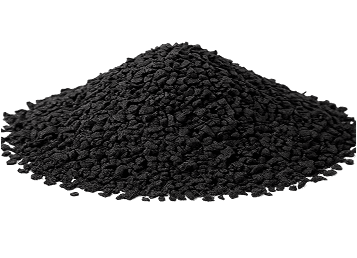
Consistent Quality | Reliable Performance | Sustainable Value
Recycled crumb rubber manufactured from Truck & Bus Radial (TBR) end-of-life tyres, supplied from 10 to 60 mesh against a certified specification.
Certified specification
Specification limits are issued on the technical data sheet rather than published on this page, so the copy you work from is the current revision and nothing else. The sheet specifies:
Each property carries its ASTM test method. Issued per grade as Rev 0, dated 01-06-25.
Not classified as hazardous under GHS, and not classified as dangerous for transport under ADR, ADN, RID, IMDG or ICAO.
The data sheet is issued per grade — choose the ones you need and they arrive together. The safety data sheet is one document covering every grade.
Both take a mobile number and a one-time code. The download starts as soon as the code is confirmed.
Crumb rubber is the granulated rubber fraction recovered from Truck & Bus Radial (TBR) End-of-Life Tyres (ELTs). At AP Rubber Group the casings are shredded, granulated, and passed through magnetic and density separation until the steel fraction and the textile are removed, then screened on ambient grinding lines to a target mesh size.
Every grade is supplied against a written specification. The material is a free-flowing, homogeneous black granulate, screened to a defined particle size and free of iron, steel and textile. Sieve passing percentages, ash content, specific gravity, rubber hydrocarbon, acetone extract and moisture are all specified per grade on the technical data sheet, with the ASTM method for each — it is available to download from this page.
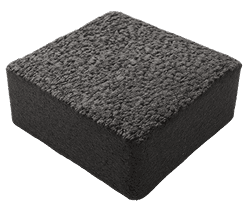
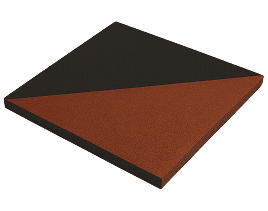
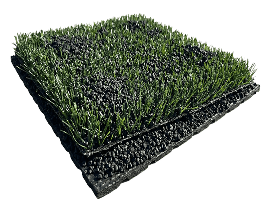
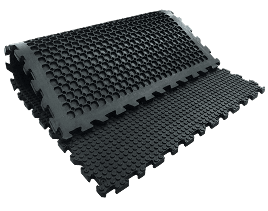
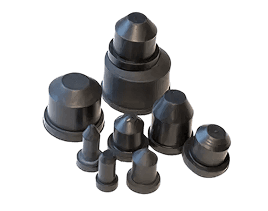
Manufacturers use it across rubberized asphalt, modified bitumen, rubber mats, industrial flooring, sports tracks, playground surfaces, insulation, moulded rubber components, paints, coatings, sealants, adhesives, plastics and thermoplastic elastomers (TPEs) — the full range of industries we serve. Where a finer particle is needed than 60 mesh will give, micronized rubber powder takes over. Because it is recovered rather than compounded from new feedstock, it carries a materially lower embodied carbon cost than the virgin rubber it replaces.
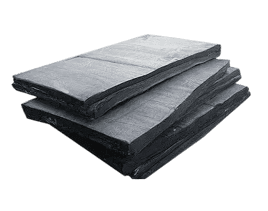
Blended into bitumen, crumb rubber raises pavement flexibility and improves resistance to rutting, fatigue cracking and thermal cracking. The result is a surface that carries heavy traffic loads for longer and needs less maintenance over its service life.
Rubber Modified Bitumen (RMB) and Crumb Rubber Modified Bitumen (CRMB) are now used in road construction in many countries, India included, where the Ministry of Road Transport & Highways has issued guidelines for modified bitumen in bituminous pavement courses.
References
For readers who want to go further on crumb rubber in road construction:
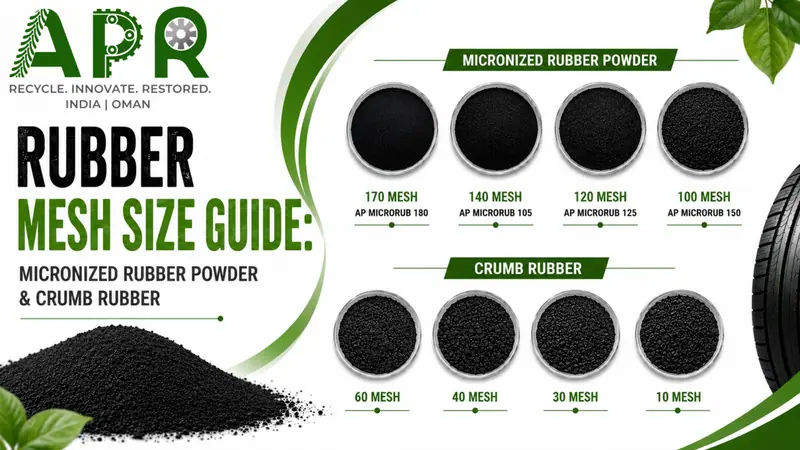
Six screened grades from 10 mesh coarse granulate down to 60 mesh. Five carry their own technical data sheet; custom particle sizes are available against a written specification.
2000 micron · 10 mesh sieve
Coarse crumb rubber for artificial turf infill, landscaping, sports track base layers, construction materials and industrial flooring, where durability and long-term performance matter more than fineness.
850 micron · 20 mesh sieve
Coarse granulate for crumb rubber modified bitumen, moulded speed bumps, paver blocks and sports track base layers, where bulk resilience matters more than surface finish.
595 micron · 30 mesh sieve
Versatile crumb rubber for moulded rubber products, paver blocks, rubber tiles, industrial gaskets and rubber compounds, providing strength and consistent processing where bulk elasticity matters more than surface finish.
425 micron · 40 mesh sieve
Fine-grade crumb rubber for sports flooring, playground surfaces, rubber mats, safety flooring and insulation products, offering excellent flexibility and durability at a consistent particle size.
300 micron · 50 mesh sieve
A finer granulate for applications needing a smoother finished surface — modified bitumen, sheet goods and moulded products held to a tighter surface tolerance.
250 micron · 60 mesh sieve
Ultra-fine crumb rubber for rubber modified bitumen, paints, coatings, sealants, adhesives, roofing materials and specialty rubber compounds that need smooth blending and precision.
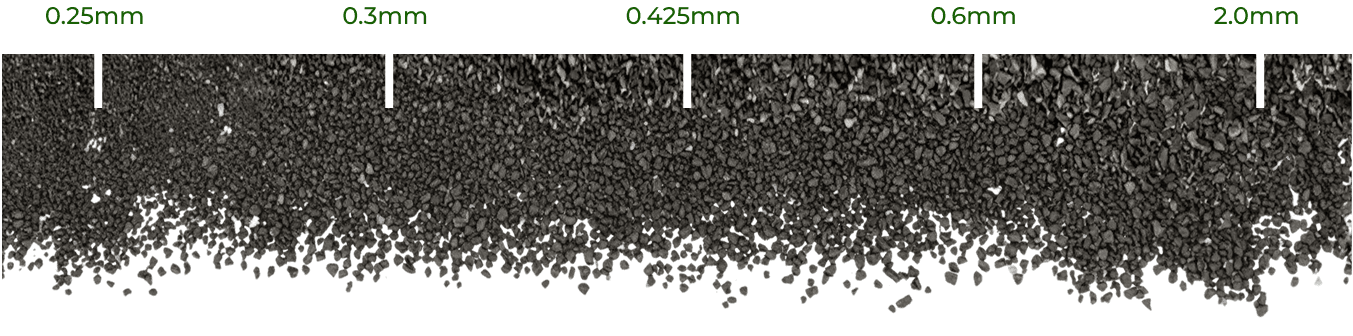
Photographed range: 0.25 mm · 0.3 mm · 0.425 mm · 0.6 mm · 2.0 mm
Enhancing performance across industries.
End-of-life tyres
Truck, bus and radial casings are received, inspected and sorted.
Shredding
Casings are reduced to chip for downstream granulation.
Granulation
Chip is milled to granulate and screened toward the target mesh.
Steel and fibre separation
Magnetic and density separation strip the steel and textile fractions.
Screening
Material is classified across 10, 20, 30, 40, 50 and 60 mesh cuts.
Quality check
Each batch is tested to ASTM D-297, D-1817 and D-5644 before release.
Circular by Nature
Turning end-of-life tyres into valuable resources
23+ Years
of recycling excellence
Global Supply
Serving customers worldwide
Advanced Processing
Consistent quality through modern technology
Trusted Partner
Built on quality, reliability and commitment
Crumb rubber is granulated rubber recovered from end-of-life tyres. The tyre is shredded and milled, the steel and textile are separated out, and the remaining rubber is screened to a defined particle size. AP Rubber Group supplies it from 10 to 60 mesh — roughly 2 mm granules down to 250 micron.
Six screened grades: 10, 20, 30, 40, 50 and 60 mesh — roughly 2000, 850, 595, 425, 300 and 250 micron respectively. Five carry their own technical data sheet; 10 mesh is produced to order against a written specification, as are custom particle sizes.
Truck, bus and radial (TBR) tyre casings. TBR carries a higher natural rubber content than passenger car tyres, which is what allows a higher-quality crumb.
Yes. Every data sheet specifies a free-flowing, homogeneous black rubber powder devoid of iron, steel and fibre. Magnetic and density separation stages remove both fractions before screening.
On the technical data sheet. Ash content, sieve passing percentages, specific gravity, rubber hydrocarbon, acetone extract and moisture are all specified per grade, with the ASTM test method for each. Download it from this page — it takes a mobile number and a one-time code, and the sheet arrives immediately.
No. Under the Globally Harmonized System (GHS) it is not classified as hazardous: no signal word, no hazard pictogram and no hazard statement. It is not classified as dangerous for transport under ADR, ADN, RID, IMDG or ICAO either. The material safety data sheet, AP/QA/MSDS/01, sets out the handling, storage, first-aid and fire-fighting guidance in full and is available to download from this page.
Standard industrial hygiene. Minimise dust generation, work with adequate ventilation, and store in a cool, dry, well-ventilated area away from sources of ignition. Prolonged exposure to airborne dust may cause mechanical irritation of the eyes and mild, transient respiratory irritation; no special protective equipment is required under normal use, though dust control is recommended during bulk handling. The safety data sheet covers each of these in detail.
Yes. Samples are available against a stated grade and intended application. Contact the team with your target specification and we will send material and the corresponding data sheet.
Ready to source crumb rubber?
Send us your target grade, volume and application. We will come back with pricing, the matching data sheet and a sample where useful.
Request a Quote
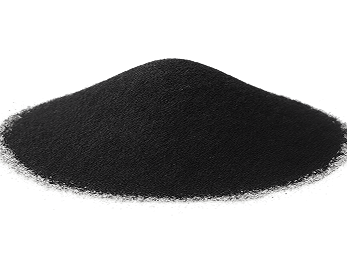 Micronized Rubber PowderUltra-fine AP MICRORUB powder, 90 to 180 micron (170 to 80 mesh), for tyre, tread and friction compounds.
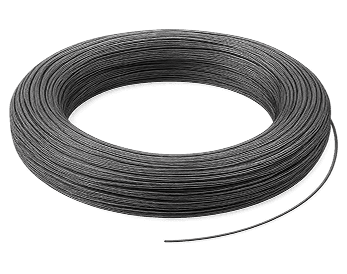 Bead Wire98.5%+ pure recycled steel wire for steel plants, welding and cut wire shot.
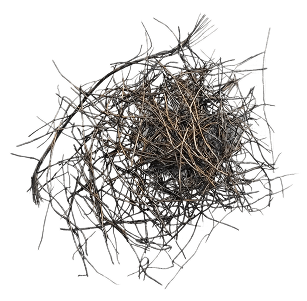 Radial WireHigh-tensile recovered cord for foundries, remelting and ingot production.
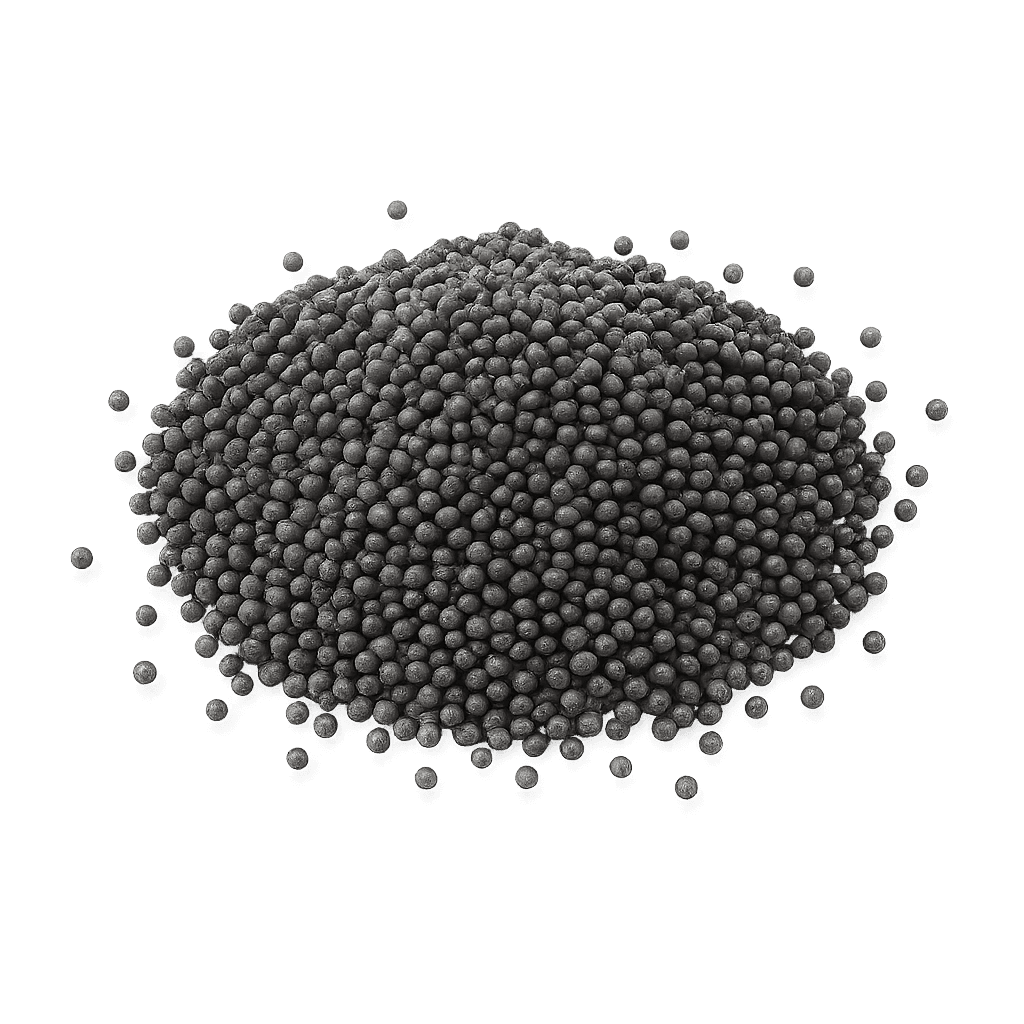 Steel ShotsRecycled cut-wire shot for abrasive blasting, peening and surface prep.
Contact Us