Materials
Micronized Rubber Powder
What separates ultra-fine MRP from coarse crumb rubber, how our ambient grinding line reaches 170 mesh (90 micron), and the four application areas it serves.
Read Article
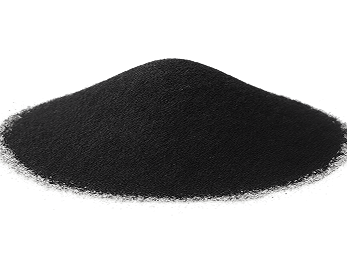
Consistent Particle Size | High Purity | Dependable Performance
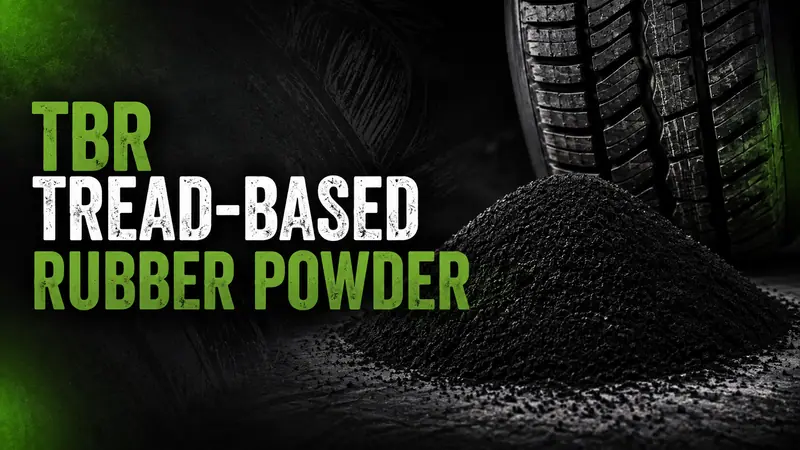
Ultra-fine AP MICRORUB powder milled from Truck & Bus Radial tread, supplied from 90 to 180 micron — a 170 to 80 mesh sieve range — against a certified specification.
Certified specification
Specification limits are issued on the technical data sheet rather than published on this page, so the copy you work from is the current revision and nothing else. The sheet specifies:
Each property carries its ASTM test method. Issued per grade as Rev 1, dated 01-06-25.
Not classified as hazardous under GHS, and not classified as dangerous for transport under ADR, ADN, RID, IMDG or ICAO.
The data sheet is issued per grade — choose the ones you need and they arrive together. The safety data sheet is one document covering every grade.
Both take a mobile number and a one-time code. The download starts as soon as the code is confirmed.
Micronized rubber powder is crumb rubber taken several stages further: milled on ambient grinding lines until the particle size is measured in microns rather than millimetres, then classified on fine sieves to hold a tight distribution. AP Rubber Group produces it from Truck & Bus Radial (TBR) tread, which carries a higher natural rubber fraction than passenger car casings.
Five grades make up the range — AP MICRORUB 180, 150, 125, 105 and 90 — and the number in each name is its particle size in microns, not its mesh count. AP MICRORUB 180 is a 180 micron powder classified on an 80 mesh sieve; AP MICRORUB 90, the finest of the five, is a 90 micron powder classified on a 170 mesh sieve. Read the range either way: 180 down to 90 micron, or 80 up to 170 mesh. The two figures always move in opposite directions, which is why a grade's mesh count is the one number its name does not carry.
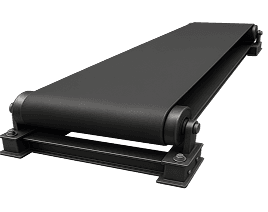
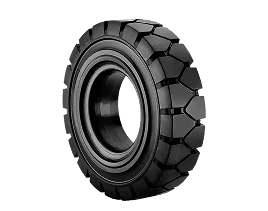
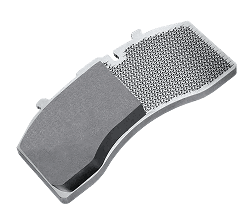
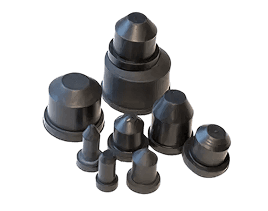
At this fineness the powder disperses into a host compound rather than sitting in it as discrete granules, which is why it is specified as a partial replacement for virgin polymer in tyre manufacturing, tread rubber, conveyor belt compounds and friction materials — see the full range of applications. Ash content is specified per grade, and the trade-off between fineness and ash is the usual basis for grade selection.
AP MICRORUB 90 is the finest grade in the range: a 90 micron powder classified on a 170 mesh sieve, milled for applications that need ultra-fine particle size, superior dispersion and consistency from batch to batch.
Milled from premium TBR End-of-Life Tyres and held to high purity, it suits tyre manufacturing, tread rubber, retreading compounds, conveyor belts and friction materials, helping compounders improve uniformity and product performance while keeping production sustainable.
Mesh and micron are two ways of stating the same thing, and they run in opposite directions — the finer the powder, the smaller its micron figure and the larger its mesh count. Our grades are named for microns, so the table below reads across to whichever scale your specification is written in.
Five milled grades in the AP MICRORUB range, named for particle size in microns. Four carry their own technical data sheet; custom particle sizes are available against a written specification.
180 micron · 80 mesh sieve
A 180 micron powder on an 80 mesh sieve — the coarsest of the five, and the one with the lowest ash specification. Specified for high-performance tyre compounds, premium tread rubber, conveyor belt compounds and friction materials.
150 micron · 100 mesh sieve
A 150 micron powder on a 100 mesh sieve, with excellent dispersion and bonding properties. Suited to tyre manufacturing, tread rubber, retreading compounds, conveyor belts and friction materials where compound uniformity is the requirement.
125 micron · 120 mesh sieve
A 125 micron powder on a 120 mesh sieve — the balanced choice for demanding industrial work. Effective in tyre compounds, tread rubber, retreading, conveyor belts and friction parts, delivering consistent mixing and reliable processing.
105 micron · 140 mesh sieve
A 105 micron powder on a 140 mesh sieve, for applications that demand precision and consistency across tyre manufacturing, tread rubber, retreading, conveyor belts and friction parts. Specified on two sieves rather than one, so its distribution is bounded at both ends.
90 micron · 170 mesh sieve
A 90 micron powder on a 170 mesh sieve — the finest grade in the range, milled for compounds that need maximum dispersion and the smoothest achievable finish. Specified for premium tyre and tread compounds, retreading, masterbatches and precision friction parts.
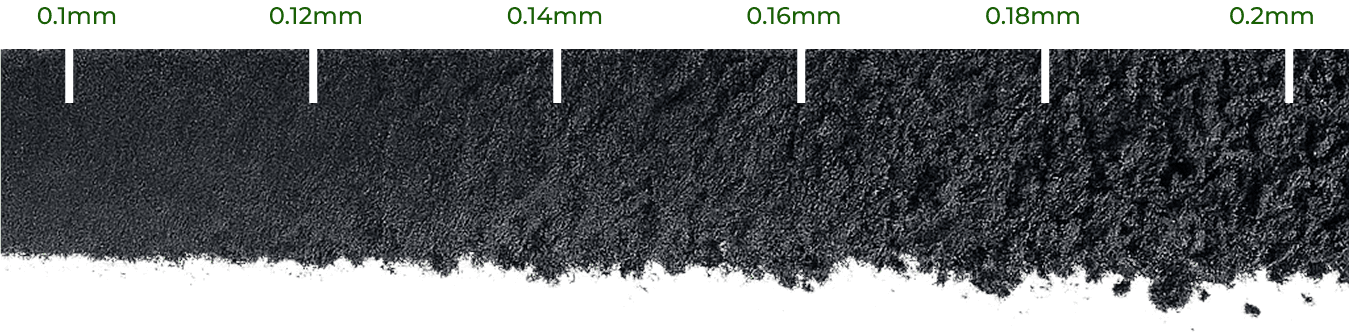
Photographed range: 0.10 mm · 0.12 mm · 0.14 mm · 0.16 mm · 0.18 mm · 0.20 mm
Enhancing performance across industries.
TBR tread
Truck and bus radial tread is selected as feedstock for its natural rubber content.
Shredding
Tread is reduced to chip ahead of granulation.
Granulation
Chip is granulated and the steel and fibre fractions are separated out.
Micronization
Granulate is milled down until particle size is measured in microns.
Fine classification
Powder is classified on fine sieves, from 80 mesh down to 170 mesh, to hold a tight distribution.
Quality check
Each batch is tested to ASTM D-297, D-1817, D-5644 and D-6370 before release, and issued against its data sheet.
Circular by Nature
Turning end-of-life tyres into valuable resources
23+ Years
of recycling excellence
Global Supply
Serving customers worldwide
Advanced Processing
Consistent quality through modern technology
Trusted Partner
Built on quality, reliability and commitment
Micronized rubber powder is recycled tyre rubber milled to a particle size measured in microns and classified on fine sieves. It is fine enough to disperse into a host compound rather than remaining as discrete granules.
Five grades: AP MicroRub 180, 150, 125, 105 and 90. The number is the particle size in microns, not the mesh count. Their sieves are 80, 100, 120, 140 and 170 mesh respectively, so AP MicroRub 90 is the finest of the five despite carrying the smallest number.
A micron size. The corresponding sieves are 80 mesh for the 180 grade, 100 mesh for 150, 120 mesh for 125, 140 mesh for 105 and 170 mesh for 90. Both figures appear on each data sheet.
Truck and bus radial (TBR) tread. TBR carries a higher natural rubber composition than passenger car radial tyres, which is what makes a higher-quality powder.
Additional milling raises the proportion of non-rubber residue in the finished powder, so the finer the grade the higher its ash limit. Selecting a grade is usually a trade-off between the two. The limit for each grade is stated on the technical data sheet, available to download from this page.
No. Under the Globally Harmonized System (GHS) it is not classified as hazardous: no signal word, no hazard pictogram and no hazard statement. It is not classified as dangerous for transport under ADR, ADN, RID, IMDG or ICAO either. The material safety data sheet, AP/QA/MSDS/01, sets out the handling, storage, first-aid and fire-fighting guidance in full and is available to download from this page.
Standard industrial hygiene. Minimise dust generation, work with adequate ventilation, and store in a cool, dry, well-ventilated area away from sources of ignition. Prolonged exposure to airborne dust may cause mechanical irritation of the eyes and mild, transient respiratory irritation; no special protective equipment is required under normal use, though dust control is recommended during bulk handling. The safety data sheet covers each of these in detail.
Yes. Custom grades can be produced against a written specification. Contact the team with your target particle size, ash limit and intended application.
Ready to source micronized rubber powder?
Send us your target grade, volume and application. We will come back with pricing, the matching data sheet and a sample where useful.
Request a Quote
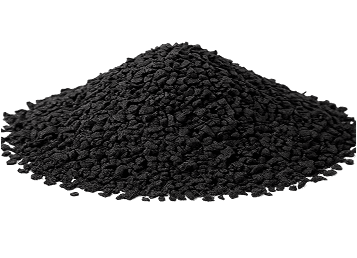 Crumb RubberSized granulate, 10 to 60 mesh (2 mm to 250 micron), for bitumen, flooring and moulded goods.
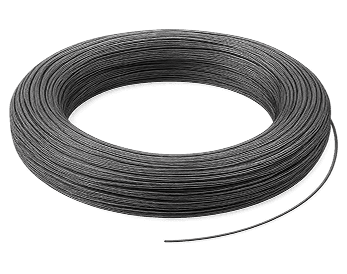 Bead Wire98.5%+ pure recycled steel wire for steel plants, welding and cut wire shot.
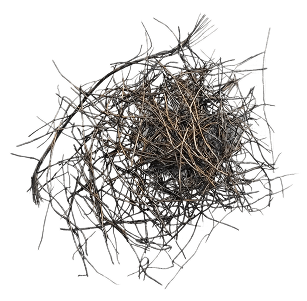 Radial WireHigh-tensile recovered cord for foundries, remelting and ingot production.
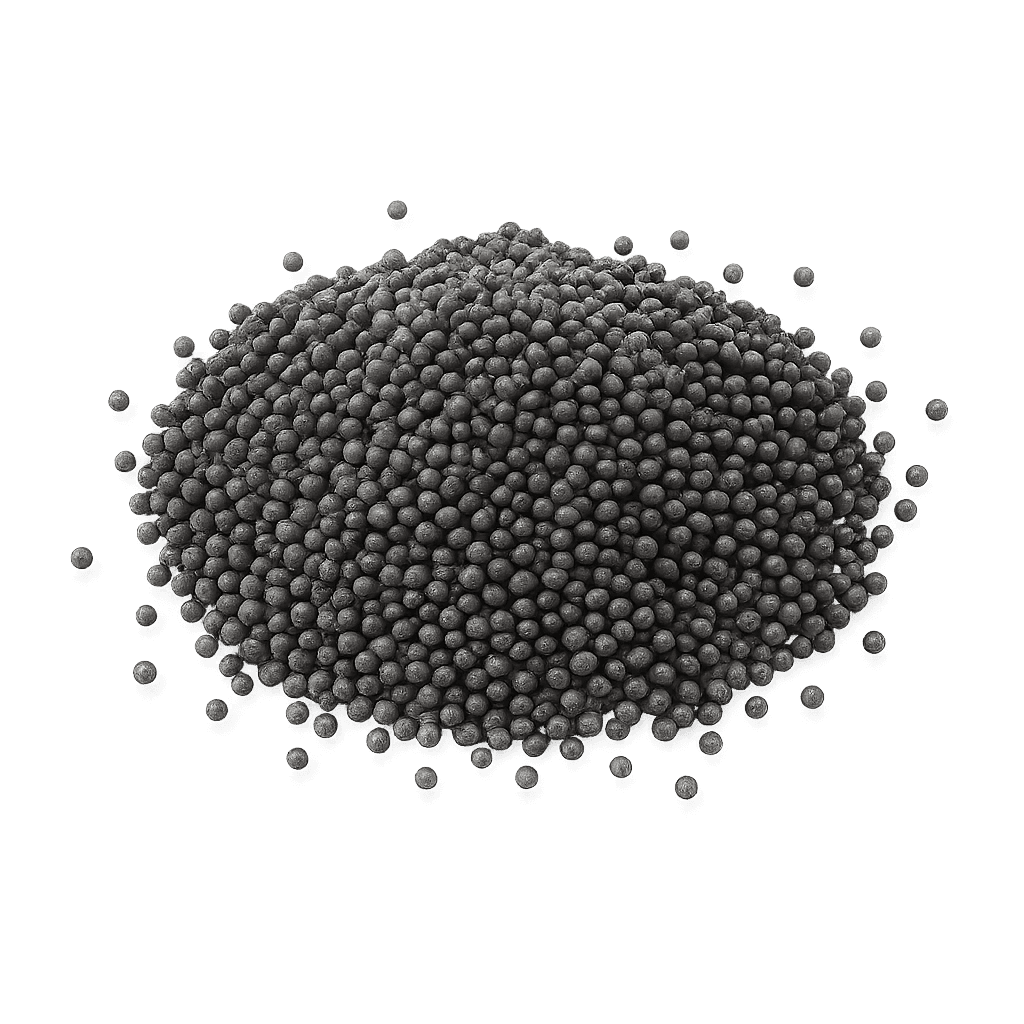 Steel ShotsRecycled cut-wire shot for abrasive blasting, peening and surface prep.
Contact Us